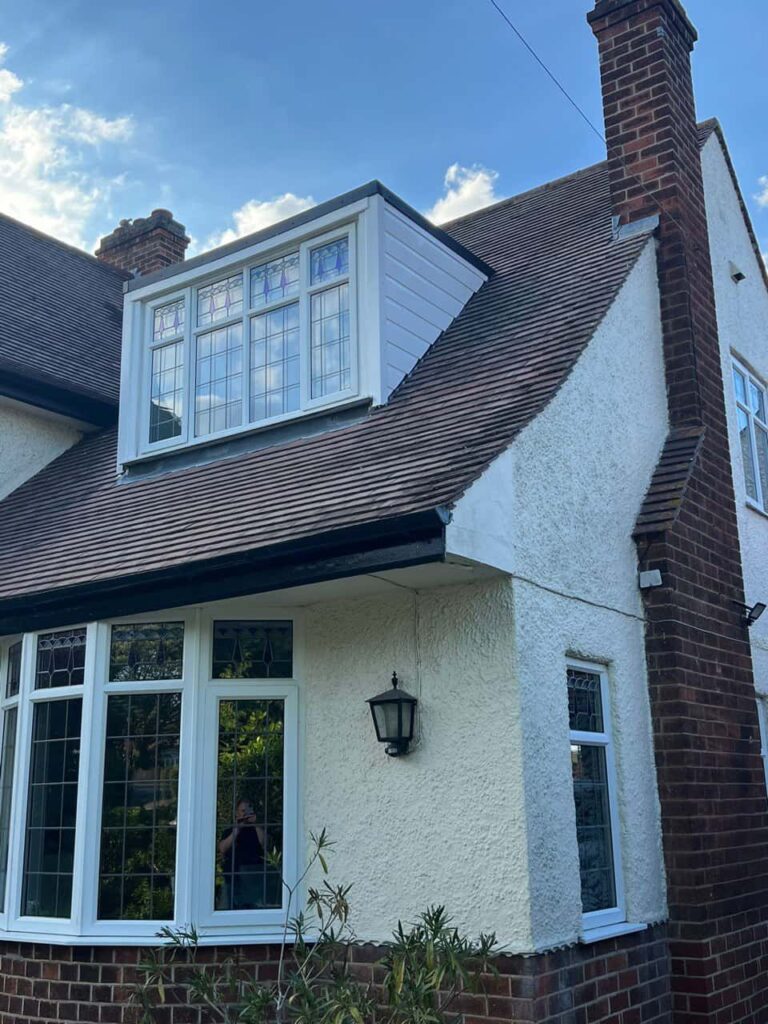
Roof leaks are often more complicated than they first appear. Water may enter the roof in one location but only become visible inside the property somewhere entirely different. For homeowners in Erith, Greater London, understanding how roof leaks behave can help explain why professional diagnosis is so important. This article outlines how leaks develop, the signs to look for and why identifying the true source usually requires expert assessment.
Why Roof Leaks Are Difficult to Trace
Roofs are layered systems designed to channel water away safely. When something fails, water does not always take the most obvious route.
Water Rarely Drips Straight Down
Once water enters the roof covering, it can travel along felt, timbers or battens before showing internally. This means the visible damp patch or stain is often some distance away from the actual point of entry.
Delayed Internal Signs
A leak may be present for some time before it becomes noticeable indoors. Insulation can absorb moisture, hiding the problem until saturation or damage becomes more advanced.
Common Internal Signs That Point to a Roof Leak
While internal signs do not confirm the exact source, they do provide useful clues.
Ceiling Stains and Discolouration
Brown or yellow staining on ceilings often indicates prolonged moisture exposure. The shape and spread of staining can suggest how long the leak has been active and whether it is ongoing.
Damp Patches in Upper Rooms or Lofts
Damp smells, dark patches or visible moisture in the loft space are strong indicators that water is entering the roof structure somewhere above.
Peeling Paint or Bubbling Plaster
Moisture behind walls or ceilings can cause finishes to lift or blister, pointing to a persistent leak rather than a one-off issue.
External Areas Commonly Responsible for Leaks
Professional roof inspections focus on specific high-risk areas.
Slipped or Damaged Roof Tiles
Tiles that are cracked, missing or out of position allow water to penetrate beneath the roof covering, particularly during wind-driven rain.
Flashings and Roof Junctions
Areas where the roof meets chimneys, walls or extensions rely on flashings to remain watertight. Even small failures in these areas can allow water to track into the roof.
Valleys and Low Points
Roof valleys and low points collect large volumes of water. Blockages, wear or poor detailing in these areas often lead to leaks that spread quickly.
Guttering and Drainage Issues
Blocked or overflowing gutters can force water back onto the roof or into roof edges, causing leaks that are easily mistaken for tile or felt failure.
Why DIY Leak Detection Is Often Misleading
Attempting to locate a leak without professional experience can lead to incorrect conclusions.
Surface-level checks may miss hidden issues beneath the tiles or within the roof structure. In some cases, repairs are made in the wrong area, allowing the true source of the leak to continue unchecked.
The Importance of Professional Roof Inspection
Professional roofers are trained to trace leaks back to their origin rather than treating the visible symptoms alone.
At Erith Roofing Repairs, we carry out detailed inspections to identify how and where water is entering the roof. By assessing both internal and external signs, we ensure repairs address the true cause of the leak and help prevent repeat problems.
Conclusion
Determining where a roof leak is coming from is rarely straightforward. Water can travel through the roof structure, making the visible signs misleading. While internal damp, stains and mould provide important clues, identifying the true source usually requires professional inspection of tiles, flashings, valleys and drainage areas.
For homeowners in Erith, Greater London, early professional assessment is the most effective way to stop roof leaks from worsening. If you suspect a problem with your roof, contacting Erith Roofing Repairs for expert advice is a sensible step towards protecting your property and restoring the roof’s integrity.
Call us on: 01322 952 296
Click here to find out more about Erith Roofing Repairs
Click here to complete our contact form and see how we can help with your roofing needs.