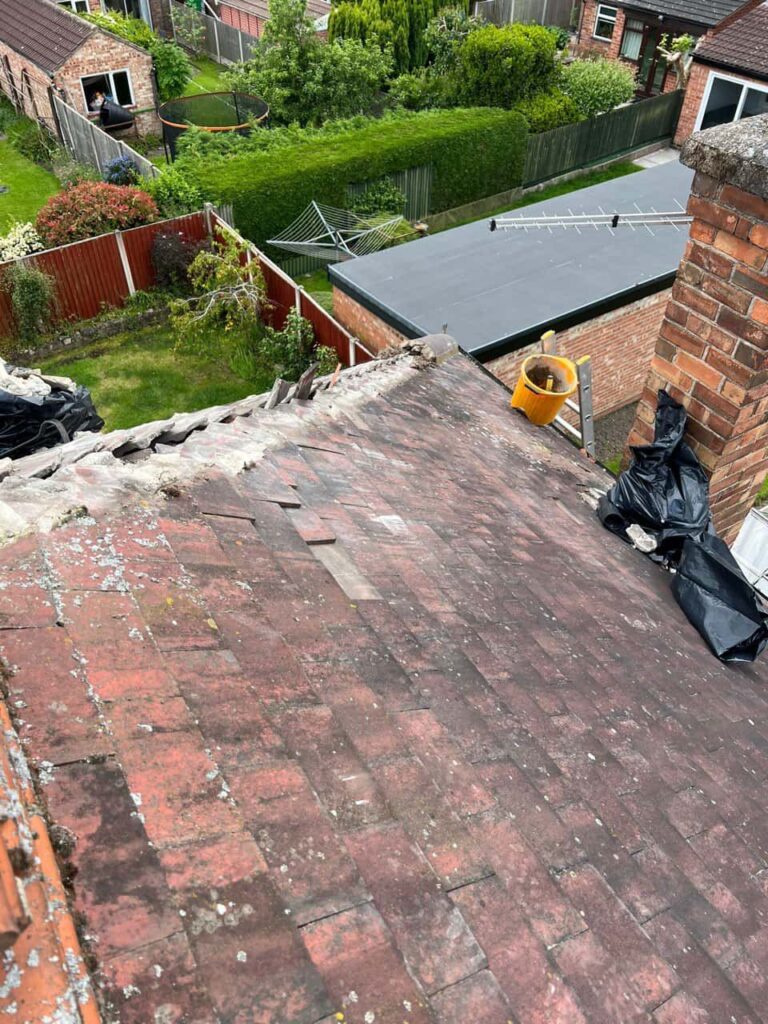
Roof tiles are designed to overlap and form a protective covering that keeps rainwater away from the underlying roof structure. When correctly fitted, they provide a durable barrier against the elements. However, over time, individual tiles can move, slip or become dislodged, leaving vulnerable sections of the roof exposed.
A slipped roof tile may initially seem like a minor problem, but even a small gap can allow water to penetrate beneath the covering. Understanding why tiles move out of position can help homeowners recognise potential problems and arrange repairs before further damage develops.
For property owners in Erith, Greater London, knowing the common causes of slipped roof tiles is an important part of maintaining a secure and weather-resistant roof.
Strong Winds and Severe Weather
Strong winds are a common cause of roof tile movement. Wind passing over and around a property can create pressure and lifting forces that affect exposed sections of the roof.
Ridge tiles, verge tiles and tiles near roof edges may be particularly vulnerable, especially if their original fixings have weakened. Repeated exposure to gusty conditions can gradually loosen individual tiles until they move out of their intended position.
Heavy rainfall can also make existing roofing problems more noticeable. Water may enter through gaps created by displaced tiles, affecting the underlay, battens and roof timbers.
Following severe weather, it is sensible to check the roof from a safe position on the ground for visible gaps, uneven lines or fallen tiles.
Ageing and Deteriorating Roof Fixings
Roof tiles are secured using different fixing methods depending on the roof design and materials. These may include nails, clips or other mechanical fixings.
Over time, fixings can deteriorate through prolonged exposure to moisture and changing weather conditions. Older metal nails may corrode, while other fixing components can weaken or become loose.
When a fixing no longer holds a tile securely, movement may occur during windy conditions or as the roof experiences normal environmental changes.
Replacing a slipped tile without checking the condition of its fixing may only provide a temporary solution. A professional inspection can establish whether the surrounding fixings also need attention.
Deteriorating Roof Battens
Roof battens provide the horizontal support to which many roof tiles are fixed or hooked. Their condition is therefore essential to keeping the roof covering properly positioned.
If battens become weakened through prolonged moisture exposure, timber decay or general ageing, they may no longer provide adequate support. Fixings can lose their grip, allowing tiles to slip or become unstable.
Problems with battens are not always visible from outside the property. In some cases, an inspection of the roof structure may be necessary to identify the extent of deterioration.
Addressing the underlying problem is important because simply repositioning the tiles will not resolve inadequate support.
Incorrect Installation or Poor Tile Alignment
Roof tiles need to be installed with the correct overlap, alignment and fixing arrangement. If the original installation was carried out incorrectly, individual tiles may be more likely to move over time.
Insufficient fixings, incorrect tile spacing and unsuitable installation techniques can all affect the stability of the roof covering.
A poorly aligned tile may also place pressure on neighbouring tiles or fail to sit securely against the supporting battens. These issues can become more noticeable as the roof is exposed to repeated wind and rain.
Professional roof repairs should address the reason for the movement, not just the visible position of the affected tile.
Broken or Damaged Roof Tiles
A cracked, chipped or broken tile may struggle to remain securely in place. Damage can occur through weather exposure, impact from falling branches or deterioration as the roofing material ages.
Even a small crack can affect the tile’s ability to provide a reliable covering. If part of the tile breaks away, the remaining section may become unstable and more likely to slip.
Damaged tiles should be assessed and replaced where necessary. It is also important to inspect nearby tiles, as the same conditions may have affected other parts of the roof.
Movement Around the Roof Structure
Changes within the roof structure can sometimes contribute to tile displacement. Timber components may respond to moisture and temperature changes, while long-term structural movement can affect the alignment of supporting materials.
Where battens or other supporting elements shift, the tiles above them may no longer sit correctly. This can create uneven sections or gaps that allow water to enter.
If tiles repeatedly slip in the same area, it is important to investigate the supporting structure rather than treating each occurrence as an isolated problem.
Why Slipped Roof Tiles Should Be Repaired Promptly
A displaced tile can leave the roof covering vulnerable to wind-driven rain. Water may pass beneath neighbouring tiles and reach the underlay or supporting timber, potentially leading to dampness, staining and deterioration.
There is also a risk that a loose tile could fall from the roof, creating a hazard around the property.
Prompt repairs help restore the protective covering and reduce the likelihood of further problems. Depending on the cause, the work may involve repositioning tiles, replacing damaged materials, renewing fixings or repairing deteriorated battens.
Professional Roof Tile Repairs in Erith, Greater London
Identifying why roof tiles have slipped is essential for achieving a lasting repair. Erith Roofing Repairs provides professional roofing repair services for property owners in Erith, Greater London.
Whether your roof has suffered wind damage, developed loose tiles through ageing or shows signs of water ingress, a professional assessment can help establish the cause and identify the appropriate work.
Conclusion
Roof tiles can slip out of position because of strong winds, deteriorating fixings, damaged battens, incorrect installation and movement within the roof structure. Although the problem may initially affect only a small area, leaving displaced tiles unattended can expose the property to water ingress and further deterioration.
Recognising the warning signs and arranging suitable repairs helps maintain the roof’s condition and protective performance. If you have noticed loose or displaced tiles, contact Erith Roofing Repairs to discuss professional roof tile repairs in Erith, Greater London.
Call us on: 01322 952 296
Click here to find out more about Erith Roofing Repairs
Click here to complete our contact form and see how we can help with your roofing needs.