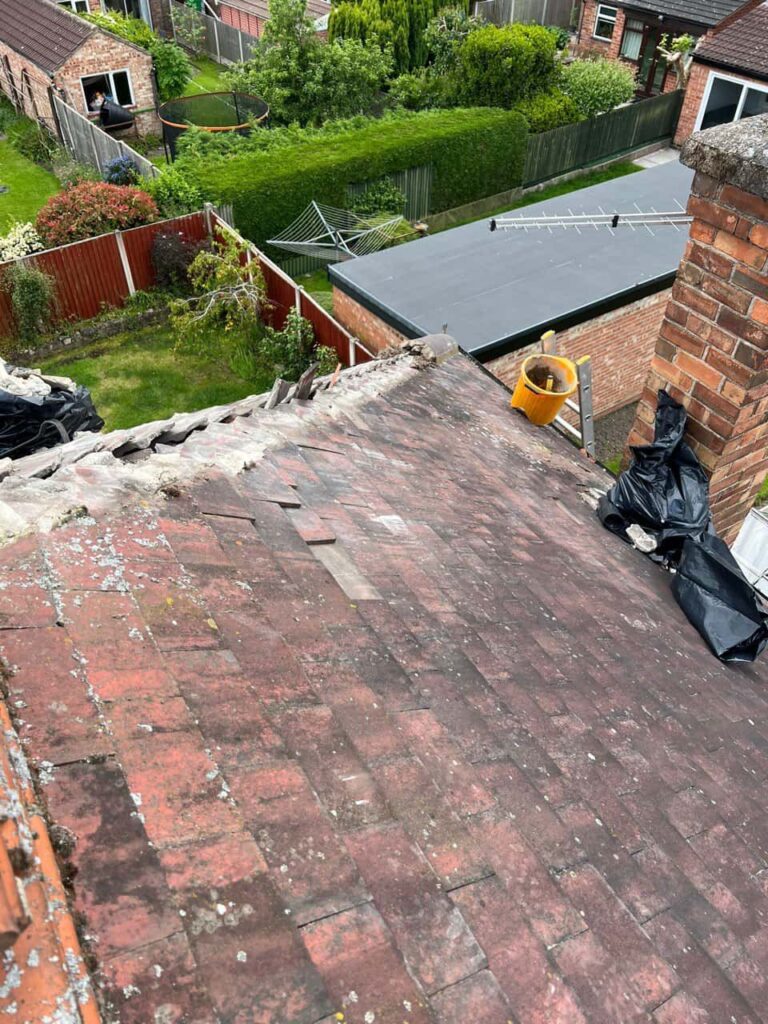
Discovering a roof leak can be worrying, but taking calm and practical action can help limit the immediate damage. Whether you notice a ceiling stain, a slow drip or dampness in the roof space, the priority is to manage the water safely and arrange for the source to be professionally identified.
For property owners in Erith, Greater London, even a minor or intermittent leak deserves attention. Water can travel through several parts of the roof before becoming visible, so the internal symptom may not be directly beneath the original defect.
What to Do After Discovering a Roof Leak
The first steps should protect the affected room without placing you at risk. Avoid climbing onto the roof or disturbing materials in a wet ceiling. Roof surfaces can be particularly hazardous during or immediately after rainfall.
Protect the Area Beneath the Leak
Move furniture, electrical items and other possessions away from the affected area where it is safe to do so. Place a suitable container beneath an active drip and use towels or protective sheeting to manage splashes.
If water is collecting close to a light fitting, socket or electrical appliance, do not touch the wet area or the fitting. Keep clear and seek suitable professional assistance.
Look for Visible Signs Without Entering Unsafe Areas
Useful observations can help a roofer investigate the problem, but they should be made from a safe position. Check whether the leak appears during light rain, prolonged rainfall or wind-driven weather.
Signs worth noting include:
- The location of ceiling stains or dripping water
- Whether the damp area is spreading
- The time and weather conditions when it appeared
- Visible slipped or broken tiles from ground level
- Dampness around a chimney breast or external wall
- Moisture in an accessible roof space
- Previous repair areas near the affected section
Photographs of the internal symptoms can also provide a useful record, particularly when the area dries before the inspection.
Do Not Assume the Leak Is Directly Above the Stain
Rainwater often follows the underside of tiles, roofing felt, rafters or pipework before reaching the ceiling. The entry point may therefore be some distance from the visible damp patch.
Common causes include:
- Cracked, slipped or missing tiles
- Damaged or poorly sealed flashing
- Deteriorated mortar around roof details
- Defects in valleys or roof junctions
- Splits in a flat roofing membrane
- Blocked or damaged drainage components
- Openings around vents and other penetrations
- Deterioration beneath the visible roof covering
A reliable repair depends on tracing the complete route of the water rather than treating only the most obvious symptom.
Avoid Temporary DIY Work on the Roof
Attempting to climb onto a wet or damaged roof can create unnecessary risk and may cause further damage to tiles, slates or fragile roofing materials. Applying sealant from inside the roof space may also redirect the water without resolving the external defect.
Temporary internal measures can help contain dripping water, but the roof itself should be assessed using the correct access methods and repair materials.
Arrange a Professional Inspection Promptly
A leak does not need to be severe before it requires investigation. Small quantities of water can soak into insulation, timber and plasterboard without producing continuous dripping.
A professional roof inspection should assess:
- The external covering around the suspected entry point
- Flashings, valleys, ridges and junctions
- The condition of the underlay and battens where accessible
- Signs of dampness within the roof space
- Whether nearby roofing materials have also deteriorated
- The likely reason the defect developed
This helps establish whether the problem is localised or part of wider deterioration.
Allow Wet Materials to Dry Properly
Once the source has been repaired, affected areas should be monitored as they dry. A ceiling stain may remain visible even though water is no longer entering, so changes should be judged over time rather than immediately after the repair.
Internal redecoration should wait until the area is dry and the roof has been shown to remain watertight during subsequent rainfall.
Check for Related Damage
Water may have affected more than the visible ceiling surface. Insulation can hold moisture, timber may become stained, and plasterboard can soften after repeated exposure.
Warning signs of a broader problem include:
- A musty smell in the roof space
- Increasing ceiling discolouration
- Peeling or bubbling paint
- Soft or swollen plasterboard
- Dampness appearing in a neighbouring room
- The leak returning during later rainfall
These symptoms should be reported during the inspection so the full extent of the problem can be considered.
Why Early Action Is Important
Roof leaks rarely resolve without intervention. A defect may appear to disappear during dry weather, only to return when rain approaches from a particular direction.
Early assessment gives the roofer a better opportunity to complete a focused repair before moisture affects a wider section of the roof. It can also reveal loose or deteriorated materials that have not yet produced visible internal damage.
Conclusion
When you first notice a roof leak, protect the affected room, record where and when the water appears, and arrange a professional inspection. Avoid climbing onto the roof or assuming that the source is directly above the internal stain.
Erith Roofing Repairs provides professional roof leak inspections and repairs in Erith, Greater London. If you have noticed dripping water, damp patches or ceiling discolouration, contact us to arrange an assessment and identify the cause.
Call us on: 01322 952 296
Click here to find out more about Erith Roofing Repairs
Click here to complete our contact form and see how we can help with your roofing needs.